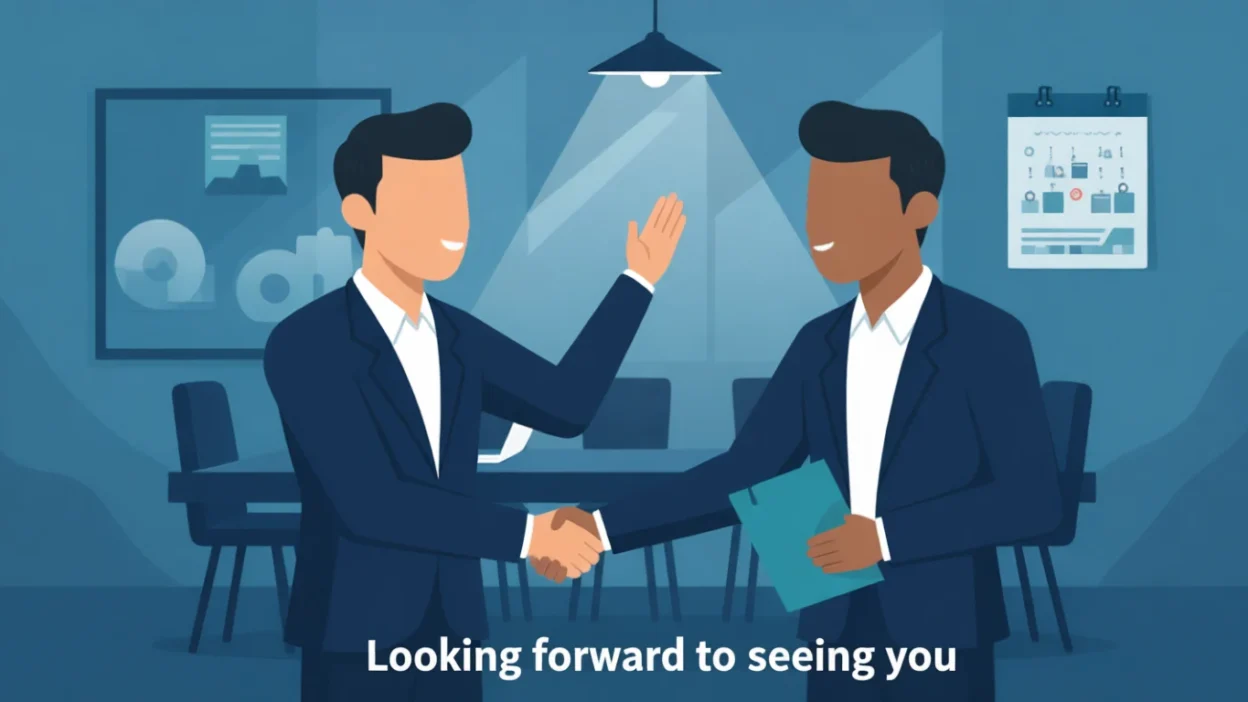
Meeting someone soon — whether in a professional, academic, or personal setting — is always something to express with warmth and anticipation. But repeating “looking forward to seeing you” can sound repetitive, especially in emails or invitations.
Here are 25+ natural, polished, and friendly alternatives, complete with meaning, example, best use, and tone, following your exact format.
Introduction
The phrase “looking forward to seeing you” communicates excitement, anticipation, and positivity. But depending on the context — formal, semi-formal, or casual — you might need a version that sounds more professional, more warm, or more enthusiastic.
Below are 25+ strong alternatives that help you express the same message with variety, clarity, and the right emotional tone.
1. Excited to See You
Meaning: Shows enthusiasm about an upcoming meeting.
Example: “I’m excited to see you at the event next week.”
Best Use: Casual or friendly messages.
Tone: Warm, upbeat.
2. Can’t Wait to See You
Meaning: Expresses strong anticipation.
Example: “I can’t wait to see you this Friday.”
Best Use: Personal or informal communication.
Tone: Enthusiastic, affectionate.
3. Looking Forward to Meeting You
Meaning: A professional version perfect for first-time meetings.
Example: “I’m looking forward to meeting you at the interview.”
Best Use: Business or formal settings.
Tone: Polished, respectful.
4. Eager to See You
Meaning: Shows active anticipation.
Example: “I’m eager to see you at the conference.”
Best Use: Semi-formal or professional contexts.
Tone: Positive, sincere.
5. Can’t Wait to Meet You
Meaning: Shows excitement about an upcoming first meeting.
Example: “I can’t wait to meet you in person.”
Best Use: Online-to-offline meetings, new clients.
Tone: Friendly, energetic.
6. Looking Forward to Catching Up
Meaning: Focuses on reconnecting.
Example: “Looking forward to catching up when you arrive.”
Best Use: Friends, coworkers, old contacts.
Tone: Warm, relaxed.
7. Excited to Connect Soon
Meaning: Shows anticipation for a professional or casual meeting.
Example: “Excited to connect soon and discuss the project.”
Best Use: Networking, professional emails.
Tone: Modern, friendly.
8. Happy to See You Soon
Meaning: Expresses simple, genuine anticipation.
Example: “I’ll be happy to see you soon.”
Best Use: Personal and semi-formal.
Tone: Warm, positive.
9. Looking Forward to Our Time Together
Meaning: Highlights the importance of the meeting.
Example: “I’m looking forward to our time together this weekend.”
Best Use: Personal or meaningful interactions.
Tone: Thoughtful, heartfelt.
10. Anticipating Our Meeting
Meaning: A more formal expression of expectation.
Example: “I’m anticipating our meeting on Tuesday.”
Best Use: Business emails, academic settings.
Tone: Professional, polite.
11. Glad We’ll Be Meeting Soon
Meaning: Expresses gratitude and positivity.
Example: “I’m glad we’ll be meeting soon to finalize things.”
Best Use: Formal or semi-formal situations.
Tone: Warm, appreciative.
12. Happy We’ll Be Seeing Each Other Soon
Meaning: Soft, friendly anticipation.
Example: “I’m happy we’ll be seeing each other soon.”
Best Use: Family, friends, coworkers.
Tone: Friendly, warm.
13. Waiting Eagerly to See You
Meaning: Shows strong anticipation.
Example: “I’m waiting eagerly to see you after so long.”
Best Use: Personal communication.
Tone: Emotional, sincere.
14. Looking Forward to Your Visit
Meaning: Used when someone is coming to see you.
Example: “We’re looking forward to your visit next month.”
Best Use: Hosts, invitations, family.
Tone: Polite, welcoming.
15. Looking Forward to Being Together
Meaning: Emphasizes spending time with the person.
Example: “I’m looking forward to being together this weekend.”
Best Use: Personal relationships.
Tone: Warm, affectionate.
16. Excited About Our Upcoming Meeting
Meaning: Professional excitement about a scheduled meeting.
Example: “I’m excited about our upcoming meeting on Monday.”
Best Use: Workplace emails.
Tone: Professional, upbeat.
17. Hoping to See You Soon
Meaning: Expresses desire but with uncertainty.
Example: “Hoping to see you soon—let me know when you’re free.”
Best Use: Flexible or tentative plans.
Tone: Gentle, friendly.
18. Great Seeing You Soon
Meaning: Short, modern expression of anticipation.
Example: “It’ll be great seeing you soon!”
Best Use: Casual messages.
Tone: Light, positive.
19. Counting Down Until I See You
Meaning: Very enthusiastic anticipation.
Example: “Counting down until I see you again!”
Best Use: Close relationships.
Tone: Excited, heartfelt.
20. Eager for Our Upcoming Catch-Up
Meaning: Highlights reconnecting and conversation.
Example: “I’m eager for our upcoming catch-up session.”
Best Use: Friends, coworkers, mentors.
Tone: Warm, thoughtful.
21. Can’t Wait to Reconnect
Meaning: Emphasizes restarting communication and connection.
Example: “Can’t wait to reconnect in person.”
Best Use: Old contacts, colleagues.
Tone: Friendly, genuine.
22. Thrilled to See You Soon
Meaning: High-energy expression of excitement.
Example: “I’m thrilled to see you soon at the event.”
Best Use: Personal or celebratory events.
Tone: Joyful, enthusiastic.
23. Anticipating Seeing You Again
Meaning: A calm but warm expression of expectation.
Example: “I’m anticipating seeing you again next week.”
Best Use: Professional or semi-formal.
Tone: Polite, reserved.
24. Looking Forward to Spending Time Together
Meaning: Emphasizes quality time.
Example: “Looking forward to spending time together over dinner.”
Best Use: Friends, family, partners.
Tone: Warm, personal.
25. Excited to Meet in Person
Meaning: Perfect when transitioning from online to offline.
Example: “I’m excited to meet in person after all our virtual calls.”
Best Use: Networking, business, online clients.
Tone: Friendly, professional.
Conclusion
Whether you’re writing a professional email, sending an invitation, or messaging someone personally, using a more expressive and varied phrase than “looking forward to seeing you” can make your message sound more warm, polished, and genuine.
Choose a phrase that fits your tone — formal, casual, or enthusiastic — to leave a stronger impact.