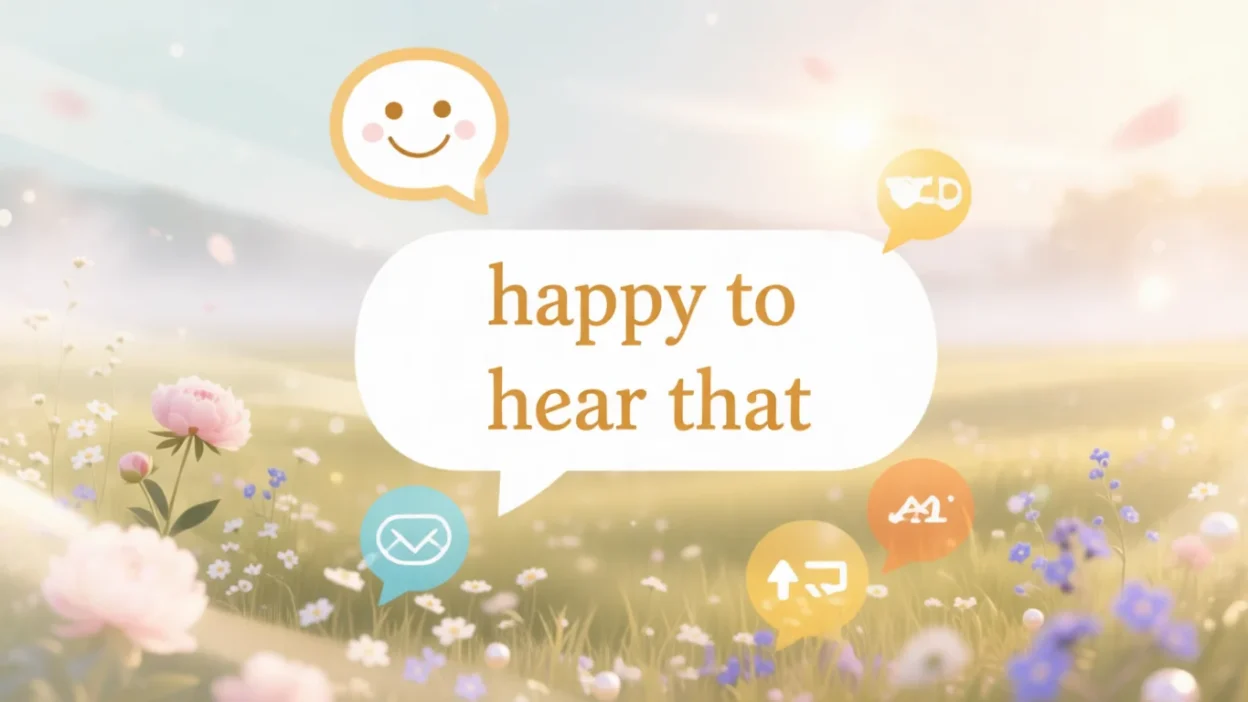
When someone shares good news, an achievement, or simply something positive that happened in their life, the phrase “happy to hear that” is a friendly and supportive response.
However, in both professional and casual conversations, repeating the same phrase can sound robotic or impersonal.
To keep your replies warm, fresh, and natural, it helps to have a variety of alternatives that express genuine joy without sounding repetitive.
Below are 25 polished, expressive, and versatile alternatives you can use in emails, chats, messages, and professional conversations.
1. That’s wonderful news!
Meaning: Expresses strong happiness about someone’s positive update.
Example: That’s wonderful news! You truly deserved this opportunity.
Best Use: Professional messages, congratulatory replies.
Tone: Warm, enthusiastic.
2. I’m really glad to hear that
Meaning: Shows genuine pleasure about someone’s situation.
Example: I’m really glad to hear that everything worked out.
Best Use: Personal and professional.
Tone: Sincere, kind.
3. That makes me so happy
Meaning: Indicates personal happiness because of their good news.
Example: That makes me so happy—congratulations!
Best Use: Close relationships.
Tone: Warm, emotional.
4. I’m thrilled to hear that
Meaning: Shows a high level of excitement.
Example: I’m thrilled to hear that your project was approved!
Best Use: Milestones and accomplishments.
Tone: Excited, positive.
5. That’s great to hear
Meaning: A simple, positive acknowledgment.
Example: That’s great to hear—keep it up!
Best Use: Everyday conversations.
Tone: Casual, upbeat.
6. I’m so pleased to hear that
Meaning: A slightly formal way of expressing happiness.
Example: I’m so pleased to hear that the meeting went well.
Best Use: Professional emails.
Tone: Polished, courteous.
7. That’s fantastic news
Meaning: Shows strong enthusiasm for their good news.
Example: That’s fantastic news—congratulations on the promotion!
Best Use: Celebrations or achievements.
Tone: Energetic, cheerful.
8. Wonderful to hear
Meaning: Short but expressive acknowledgment.
Example: Wonderful to hear! Let’s move forward with the next steps.
Best Use: Quick replies.
Tone: Warm, concise.
9. That brightened my day
Meaning: Their news made you genuinely happy.
Example: That brightened my day—thank you for sharing.
Best Use: Personal messages.
Tone: Emotional, friendly.
10. That’s awesome
Meaning: Shows casual excitement.
Example: That’s awesome—so proud of you!
Best Use: Informal chats, texting.
Tone: Casual, upbeat.
11. I’m delighted to hear that
Meaning: A formal way to express joy.
Example: I’m delighted to hear that the results were positive.
Best Use: Professional or respectful communication.
Tone: Formal, polished.
12. I’m so happy for you
Meaning: Shares joy in someone else’s happiness.
Example: I’m so happy for you! You worked hard for this.
Best Use: Personal achievements.
Tone: Warm, supportive.
13. That’s encouraging to hear
Meaning: Shows relief and positivity.
Example: That’s encouraging to hear—let’s keep going.
Best Use: Updates about progress.
Tone: Reassuring, optimistic.
14. So glad things are going well
Meaning: Shows happiness about their situation improving.
Example: So glad things are going well for you.
Best Use: Long-term updates.
Tone: Comforting, friendly.
15. That’s excellent to hear
Meaning: A refined way of acknowledging good news.
Example: That’s excellent to hear—thank you for the update.
Best Use: Work-related updates.
Tone: Professional, positive.
16. That sounds amazing
Meaning: Shows excitement about what they said.
Example: That sounds amazing—enjoy every moment!
Best Use: Trips, achievements, life events.
Tone: Excited, friendly.
17. I’m relieved to hear that
Meaning: Shows happiness and relief.
Example: I’m relieved to hear that everything is okay.
Best Use: Health, safety, stressful situations.
Tone: Caring, gentle.
18. That’s music to my ears
Meaning: A playful way to say their news makes you happy.
Example: That’s music to my ears—great job!
Best Use: Friendly conversations.
Tone: Playful, light-hearted.
19. Glad to hear the positive update
Meaning: Acknowledges good progress.
Example: Glad to hear the positive update—keep me posted.
Best Use: Work updates.
Tone: Professional, concise.
20. That’s truly great to know
Meaning: Shows deep appreciation for their news.
Example: That’s truly great to know—thanks for sharing.
Best Use: Polite conversations.
Tone: Sincere, respectful.
21. That’s uplifting news
Meaning: Indicates the news has a positive emotional impact.
Example: That’s uplifting news—congratulations!
Best Use: Emotional or meaningful updates.
Tone: Heartwarming, supportive.
22. That’s so good to hear
Meaning: Simple and heartfelt expression.
Example: That’s so good to hear—wishing you the best.
Best Use: Any positive news.
Tone: Warm, casual.
23. I’m overjoyed to hear that
Meaning: Shows strong happiness.
Example: I’m overjoyed to hear that everything turned out well.
Best Use: Big events or emotional news.
Tone: Emotional, expressive.
24. That’s truly wonderful
Meaning: Highlights deep appreciation of their news.
Example: That’s truly wonderful—congratulations on the achievement.
Best Use: Milestones and celebrations.
Tone: Elegant, heartfelt.
25. That’s great progress
Meaning: Appreciates improvement or advancement.
Example: That’s great progress—keep up the good work.
Best Use: Projects, learning, goals.
Tone: Motivational, positive.
FAQ About “Happy to Hear That”
1. Is “happy to hear that” formal?
Yes, it is acceptable in both formal and informal settings.
2. What is the most professional alternative?
“I’m pleased to hear that” or “That’s excellent to hear.”
3. Is it okay to use this phrase in emails?
Absolutely—it’s polite and friendly for professional communication.
4. Can I use it with clients?
Yes, especially alternatives like “I’m delighted to hear that” or “Glad to hear the positive update.”
Conclusion
Saying “happy to hear that” is an easy way to show positivity and appreciation.
But having multiple alternatives helps you sound more expressive, supportive, and natural—whether you’re texting a friend, responding to a colleague, or congratulating someone professionally.
Use the phrases above to match the tone of your message and strengthen your communication.